AT FAMILY VISION CARE and Vision Therapy, Dr. Carole Hong has found a powerful antidote to the monotony of routine “which is better, one or two?” care by specializing in vision therapy (VT). Focusing on how the brain and eyes work together, Hong has built a practice that serves as a life-changing center for rehabilitation, from helping students struggling with reading to assisting athletes with timing.
THE IDEA

Dr. Carole Hong
The spark was lit during Hong’s undergraduate years at UC Berkeley, where she witnessed a dramatic transformation in a young patient. She watched a shy boy with a nervous tick blossom into a talkative, animated individual once his visual challenges were addressed. That experience stayed with her through her residency at SUNY College of Optometry, where she realized that specialized care was the key to moving patients away from a life of headaches and eyestrain.
Hong is now committed to what she and her colleagues call “ending the senseless struggle.” While primary care is essential for eye health, she recognized that many patients corrected to 20/20 remain deeply unhappy with how they actually see.
“We help individuals plagued by screen fatigue, students struggling with reading, learning or attention, or those who have had a concussion and suddenly find the grocery store a source of nausea and anxiety,” Hong says. The goal was to solve functional problems that routine exams often miss.
Advertisement
THE EXECUTION
To ensure profitability and clinical confidence, Hong urges those implementing VT to start small, using an existing exam lane during off-peak hours with a basic starter kit, such as a Bernell kit. As patient volume grew, Family Vision Care scaled up significantly. Today, the practice dedicates roughly 30% of its 2,800-sq.-ft office to VT, annually adding high-tech equipment such as the Sanet Integrator, ReadAlyzer and Optics Trainer VR programs.
The staffing model also evolved, now including seven vision therapists and a full-time VT coordinator who manages evaluations and billing. Marketing is rooted in education rather than traditional advertising. Hong targets professional referral sources, such as occupational therapists and neuropsychologists. “Education must focus on tangible patient symptoms that resonate, not clinical terminology,” Hong explains.
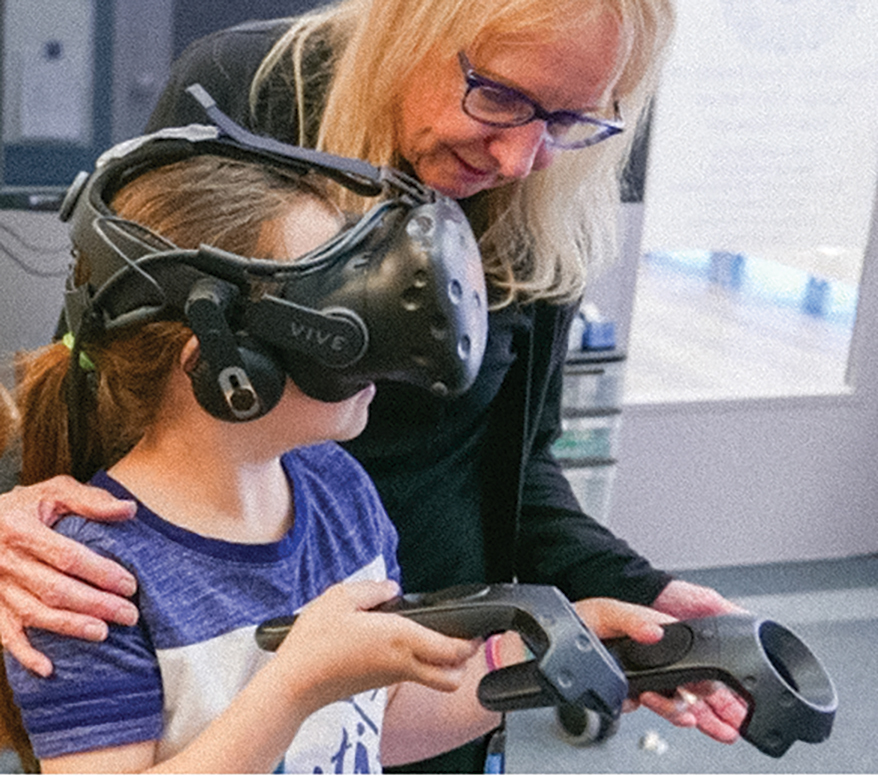
Seven therapists and a full-time coordinator help manage evaluations and billing.
THE REWARDS
The move into VT has allowed Hong to engage with complex cases like traumatic brain injuries and neuro-divergent conditions while — as a largely private-pay, out-of-network service — creating a revenue stream independent of declining insurance fees and restrictive vision plans. But the deepest rewards are personal.
There is an unparalleled emotional payoff in seeing a child move from school failure to academic success or helping a concussed patient return to a normal life. “We love moving a patient from a life of avoidance to one of peak performance,” Hong says. “This work fundamentally impacts lives, changing your perspective from symptom management to transformative mission.”
Advertisement
Do It Yourself: Start a Vision Therapy Specialty
- SHADOW OFFICES. Observe existing VT practices’ workflow and operational structure before you launch your own, Hong counsels.
- PRIORITIZE CE. Utilize the Optometric Vision Development & Rehabilitation Association and similar organizations.
- FIND A GURU. Secure an experienced mentor to guide your initial clinical decisions and help you navigate complex case management.
- EASY WINS. Start with straightforward cases (convergence insufficiency, basic tracking) to ensure early patient success.
- HIRED HAND. Engage a consultant to streamline targeted marketing, complex billing, and integrating patient education protocols.
